From Separate Pain Points to Shared Wins: A New Model for Cross-border Legal Collaboration on Chinese Outbound Matters

Observations and lessons from SIPAC Chairman Robert Lewis’s keynote at SILF 2026
On April 17, 2026, at the public forum on Day 2 of the 2026 SIPAC Sino-International Law Forum (SILF 2026) in Shenzhen, SIPAC Chairman Robert Lewis delivered a keynote titled “Best practices for cross-firm collaboration in Chinese companies’ outbound legal matters: how Chinese and foreign lawyers can spot opportunities, meet challenges and achieve real win-win outcomes together”.
The talk was not about legal updates in a particular jurisdiction, nor a technical walk-through of transaction documents or dispute procedures. Drawing on a year of in-depth conversations between SIPAC and hundreds of Chinese lawyers, foreign lawyers, in-house counsel and international legal service providers, it set out to answer a more basic, more practical and more strategic question:
As Chinese companies accelerate their expansion abroad, how can Chinese companies, their in-house counsel, Chinese lead counsel and local foreign counsel build a cross-firm, cross-jurisdiction collaboration model that is more efficient, more trusting and better suited to the needs of Chinese outbound business?
Chinese outbound investment is creating one of the most important new opportunities in the global legal services market, Robert said — but that opportunity does not automatically turn into smooth collaboration. Business teams, in-house counsel, Chinese outside counsel and local foreign counsel commonly differ in their assumptions, miscommunicate, understand risk differently, work to unclear scopes and hold mismatched expectations on fees and timing. That is why SIPAC aims to build more workable collaboration mechanisms for this emerging market through ongoing research, training, roadshows, knowledge resources and its international network of member firms.
Geopolitics and Chinese outbound investment are reshaping the legal services market together
Robert began with the big picture. Despite trade frictions and geopolitical tension, Chinese foreign trade and outbound investment have not stalled; they continue to grow and keep setting new records. At the same time, foreign investment into China has slowed — a shift with far-reaching consequences for the Chinese legal services market.
For a long time, the main role of Chinese cross-border lawyers was to provide local Chinese legal services to foreign companies entering China. Many Chinese lawyers and firms took part in cross-border projects as Chinese local counsel to foreign clients and international law firms. Today, as Chinese companies go global, that role is fundamentally changing: Chinese lawyers are no longer only local counsel, but increasingly act as China lead counsel on outbound projects, helping clients coordinate legal resources across many countries and regions.
This is a major transformation.
Behind it lies a key word in Chinese business today: neijuan, or “involution”. Involution is not only a pressure on Chinese companies, Robert noted; it is also shaping the Chinese legal market itself. Fierce competition and heavy price pressure at home are pushing more and more Chinese companies to look abroad for better margins and growth. For Chinese lawyers, serving these companies comes with intense price competition, time pressure and demanding client expectations.
Chinese outbound investment is therefore both a huge new opportunity for the global legal market and a major challenge to existing models of international legal service.
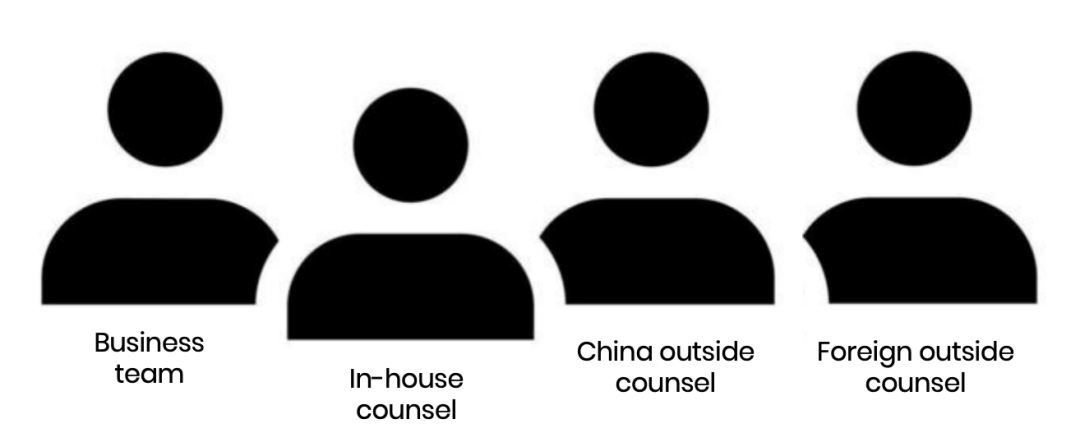
Four participants in outbound legal work — each with its own pain points
Robert stressed that every participant in the chain of outbound legal work is under a different kind of pressure. Only by truly understanding each side’s pain points can an effective collaboration model be built.
1. Business teams: hoping to replicate the China playbook, which does not always work abroad
When they first enter an overseas market, many Chinese business teams make a “naive assumption”: that the business model, execution style and management experience that worked in China can be copied directly abroad.
Reality is often different.
Overseas markets may differ greatly from China in their legal systems, regulation, government approvals, business culture, labor relations, tax rules, compliance requirements and litigation risk. Companies that push ahead based on domestic experience can run into unexpected risks in approvals, deal structure, contract performance, dispute resolution and compliance.
Business teams also tend to put strong time and cost pressure on in-house counsel, wanting quick, actionable answers and the lowest possible outside legal spend. That pressure is passed all the way down the service chain.
2. In-house counsel: increasingly international work, with resources and experience still being built
Compared with the mature global legal functions of many multinationals, Robert noted, many Chinese in-house teams are still learning fast and building capability in international matters. They may not yet have deep experience managing overseas legal projects, or a network of outside counsel covering the world’s main markets.
This is not a lack of ability but a reality of the market’s stage of development. Large-scale outbound expansion by Chinese companies has accelerated only in recent years, and the internal legal resources, management processes and global legal supply chains to support it need time to mature.
In-house counsel therefore have to meet the business’s demands for speed, accuracy and savings, coordinate complex foreign law issues, and balance budget, risk and project timelines all at once.
3. Chinese lead counsel: from local Chinese counsel to coordinators of global cross-border projects
For cross-border lawyers at Chinese firms, the change in role is just as great.
In the past, they mostly handled the Chinese law workstream on inbound projects. Now they must coordinate overseas legal resources on behalf of Chinese clients, explain foreign legal risks to those clients, and explain to foreign lawyers the client’s business logic, budget, decision-making style and risk appetite.
This calls for new skills: understanding not only Chinese clients but also international legal service processes; not only doing Chinese law work but managing multi-jurisdiction projects; not only communicating with clients but building trust and effective working relationships with local foreign counsel.
That is why Robert stressed that the role of China lead counsel is critical. Between Chinese companies, their in-house counsel and local foreign counsel, the China lead counsel is the most important bridge — and the person best placed to build trust, reduce misunderstanding and improve efficiency for everyone.
4. Local foreign counsel: a huge opportunity with a client group that works differently
From the perspective of local foreign counsel, Chinese clients bring new challenges too.
Many local foreign lawyers have long served multinationals and large international law firms. These clients typically have mature international project management, clear scopes of work, relatively stable budget expectations, and fairly standardized requirements for due diligence, documents, memos and opinions.
Chinese clients often differ markedly from traditional international clients in their sensitivity to time and cost, their risk tolerance and the form of work product they want. Many foreign lawyers feel, Robert said, that projects with Chinese clients can be less predictable, less profitable, less clearly scoped and less consistent in turnaround.
That perception creates a paradox: Chinese clients want foreign lawyers to respond faster and charge less, but if foreign lawyers see the opportunity as uncertain, low-margin and poorly briefed, they may respond more slowly — or decline to commit enough resources at all.
This is exactly the problem SIPAC wants to help all sides solve together.
Why “fast” and “cheap” mean different things to Chinese clients and foreign lawyers
When he tells people in the international legal community that Chinese clients are “time-sensitive and cost-sensitive”, Robert said, they often reply: “Every client wants it faster and cheaper.” But he stressed that the difference between Chinese clients and traditional international clients is not a matter of degree — it is an order of magnitude.
There are several important reasons for this.
First, Chinese companies have a different business decision-making culture from many Western multinationals. In Chinese companies — especially private and fast-growing ones — the “big boss’s” judgment, business instinct and drive often set the pace of a project. Business teams care most about results and execution, and are not necessarily willing to pay high fees for comprehensive, lengthy, layered legal analysis.
Second, Chinese companies usually have a higher risk tolerance. Where an international client might want counsel to analyze 18 of 20 risk points, a Chinese client may only want the six or seven that matter most. Chinese clients do take risk seriously; they simply prefer to focus on the core risks that really matter to the business decision.
Third, Chinese companies prefer direct, concise, actionable legal advice. Robert drew on his own move from private practice to in-house: a lawyer may think cutting a six-page memo to a page and a half is concise, but the business team may still ask, “Why is it still so long? I just want the answer.”
As the saying goes, the client asked what time it is, not how to build a clock.
When serving Chinese clients, local foreign counsel therefore need to rethink the form of their work product. Is a long due diligence report always necessary? Would a shorter red-flag report do? Could an executive summary plus the key steps to deal with each issue be enough? Can the advice answer the client’s real questions more directly, while keeping the necessary legal caveats and disclaimers?
Chinese clients tolerate more risk — but often face more risk abroad
Robert also cautioned that although Chinese clients are generally more willing to accept risk, that does not mean the risks they actually face are lower. On the contrary, in many overseas markets Chinese companies may face greater regulatory scrutiny and compliance risk.
These risks include foreign investment approvals, national security reviews, sector licensing, regulatory permits, sanctions compliance, data compliance, labor issues, environmental requirements, anti-corruption risk and matters involving relations with local government. Some local regulators are unfamiliar with Chinese companies, or even hold long-standing doubts about them. Companies that do not understand local procedures and regulatory logic can make projects even harder.
On some high-risk, high-value matters, therefore, price should not be the first consideration. When a client needs to persuade government authorities, obtain key approvals or deal with major compliance risks, Robert stressed, it needs the most experienced, most respected lawyers who can actually solve the problem. Fees should then be judged not in isolation, but against risk control and the success of the whole project.
Chinese clients need to strike a new balance between “controlling costs” and “avoiding major losses”. Investing a little more in legal work at the start can prevent much greater delay, cost and reputational damage later.
High context and low context: talking past each other across cultures
Robert drew on the cultural dimensions in The Culture Map by INSEAD professor and author Erin Meyer to explain a common communication gap between Chinese clients and foreign lawyers.
Chinese business tends to be closer to high-context communication, he said, where the speaker assumes the listener already understands the background, relationships, intentions and what is left unsaid. When Chinese clients or lawyers brief foreign counsel, they may therefore leave out a great deal of background, assuming it will be understood.
Many foreign lawyers, by contrast, work in a low-context legal culture, where professionals expect information that is as clear, complete and specific as possible: the client’s background, the status of the deal, scope, budget, timetable, counterparties, work already done and how real the project is.
If the Chinese side provides too little information, foreign lawyers feel they are bidding or quoting blind. Asked for a capped fee without enough information to judge the workload and risk, they naturally become less willing to commit — or raise their quote to cover the uncertainty.
Robert used the Chinese idiom ji tong ya jiang — “a chicken talking to a duck” — to describe this: both sides are talking, but they are not sharing the same context.
Fixing this takes adjustment on both sides. The Chinese side needs to offer background and detail more proactively; the foreign side needs a deeper understanding of Chinese business culture to cut down on unnecessary explanation.
China lead counsel are the key bridge of trust
One of Robert’s central points was that the role of China lead counsel is decisive.
Local foreign counsel and Chinese clients often lack any direct basis for trust, he noted. A foreign lawyer receiving an email from a stranger may not know who the sender is, may not know the Chinese firm, and may not know the Chinese client’s market position or whether the project is real. Even a client that is very important in China may be unknown to them.
China lead counsel therefore need to help foreign lawyers understand: Who is the client? Is the project real? Is the client serious? Has the Chinese firm already been engaged? Is this a competitive pitch? What is the client’s rough budget? What is the scope and division of work? How urgent is the timetable? How far has the project progressed?
This information directly shapes how a foreign lawyer judges the opportunity, and therefore how much they commit and how quickly they respond.
China lead counsel, Robert stressed, need to build trust with the client — truly understanding its business goals and risk appetite — and also with local foreign counsel, so that they believe the opportunity is real and worth the investment. China lead counsel are the key node that carries trust in both directions.
That is why SIPAC places great importance on long-term relationships with Chinese cross-border lawyers. SIPAC does not simply introduce Chinese clients to foreign lawyers; through ongoing cooperation, training, project reviews and resource building, it aims to help China lead counsel manage global legal resources better and build sustainable working relationships with local foreign counsel.
Foreign lawyers need to redesign their services for the Chinese ODI market
If foreign lawyers want to capture the huge opportunity created by Chinese outbound investment, Robert argued, they cannot expect Chinese clients to turn into traditional international clients from Western Europe, North America or the G7. Chinese clients will not simply copy Western multinationals in how they value legal services, what documents they prefer, how they trade off risk, or what fees they expect.
Foreign lawyers therefore need to redesign their service model for the Chinese outbound direct investment (ODI) market.
This includes:
First, faster responses. Foreign lawyers need to understand Chinese clients’ business pace and decision-making speed, and be as efficient as possible while maintaining professional standards.
Second, sharper focus. Work product should not aim for comprehensiveness by default, but be scoped to the client’s real questions, risk tolerance and business goals.
Third, more flexible pricing. Foreign lawyers can offer tiered service options based on the client’s budget and scope, rather than simply applying fee models designed for traditional international clients.
Fourth, a focus on actionability. Chinese clients usually want clear conclusions, practical steps and risk alerts rather than long, abstract, overly conservative legal analysis.
Fifth, better use of tools and resources. Systematic knowledge bases, standardized project processes, legal technology and AI tools can all help foreign lawyers work more efficiently, reduce costs and better meet Chinese clients’ needs.
But Robert also cautioned that a shorter work product does not mean lower professional standards. In fact, producing something shorter and more direct often demands more experience and judgment.
The Chinese side also needs a better understanding of international legal and business culture
Robert’s message was not only that foreign lawyers must adapt to Chinese clients. Chinese companies, in-house counsel and China lead counsel, he said, also need a better understanding of overseas legal risks and international business culture.
Clients who push too hard for the lowest fees at the start may later face higher regulatory costs, deal delays, dispute risk or even reputational damage. Without understanding local approval logic and risk structures, they may underestimate how important certain legal issues are.
China lead counsel therefore need to help clients understand which risks are acceptable and which cannot be ignored; which legal work can be streamlined and which must be handled in depth by top local counsel; and which matters are routine legal support and which are high-end legal services that decide whether a project succeeds.
This means China lead counsel must translate and mediate between the client’s business goals and foreign counsel’s professional judgment, rather than simply passing on the client’s demands.
How to turn a “cold email” into a high-quality opportunity
One of the most common complaints from foreign lawyers, Robert said, is that they receive “cold-call emails” asking for quotes with too little information — they must price work without knowing the client’s background, the status of the project or the scope. In this model, success rates are low and foreign lawyers easily lose motivation.
Robert therefore suggested that Chinese lawyers seeking support from local foreign counsel provide as much of the following as possible:
- Client background. Even if the client’s name cannot be disclosed, explain its industry, size, market position and the importance of the project.
- The Chinese lawyer’s relationship with the client, including whether they have been engaged and whether there is a stable working relationship.
- Project status — for example, whether it is really moving, still at an early exploratory stage, whether there is a counterparty, and whether substantive negotiations have begun.
- Scope and division of work, including exactly what the foreign lawyer needs to do and which parts the China lead counsel will handle.
- An approximate budget, since foreign lawyers can adjust the depth of service and form of work product accordingly.
- Timing, and whether the deadline is genuinely urgent.
- Whether it is a competitive pitch, and how the client will decide on counsel.
This information may seem basic, but in practice, Robert noted, foreign lawyers often cannot get it — and that lack of information is why many projects struggle from the very start.
SIPAC’s role and mission: building a true Sino-global legal community
Robert closed by outlining several concrete directions for SIPAC’s work in building China–international legal collaboration.
First, SIPAC will continue to promote mutual understanding between Chinese lawyers, in-house counsel and foreign lawyers through training, knowledge resources, webinars, in-person roadshows and its annual forum.
Second, SIPAC will keep expanding and deepening its global network of member firms. SIPAC is now connected with leading independent firms in more than 140 jurisdictions, and can quickly help Chinese lawyers and in-house counsel find suitable, reliable foreign counsel whenever a Chinese client needs local legal support in a given country.
Third, SIPAC plans to produce member firm profiles better suited to the Chinese market — highlighting not only rankings and traditional strengths, but also each firm’s experience serving Chinese clients, its understanding of the local market, and common successes and mistakes of Chinese companies in that market.
Fourth, SIPAC will build a knowledge library of member firm resources, so that Chinese lawyers seeking foreign legal support can access practical articles, legal updates and training materials relevant to their project alongside firm profiles.
Fifth, SIPAC will set up different types of global expert groups — for day-to-day international legal support, for specific industries and for specific practice areas — to serve Chinese companies going global more systematically.
Sixth, SIPAC will follow developments in legal AI and related tools. Relying on AI products alone to deliver core legal services still has limits, Robert believes; but combined with expert review, expert-curated databases, expert-designed prompts and review by qualified lawyers, AI can add real value at certain stages of legal work.

ConclusionFrom understanding differences to adjusting together
The core of Robert Lewis’s keynote was not simply that Chinese clients and foreign lawyers are different. It was that these differences are both a challenge and the starting point for a new model of collaboration.
Chinese outbound investment will continue to drive structural change in the global legal services market. Foreign lawyers need to understand China’s new business culture and adapt to Chinese clients’ expectations on speed, cost and results; Chinese companies and lawyers need a deeper understanding of overseas legal risks, international legal service processes and local regulatory cultures.
In this process, the bridging role of China lead counsel is especially important. Only when China lead counsel accurately understand client needs and turn them into a clear scope that foreign lawyers can act on — while helping clients understand foreign legal risks and the logic of international professional services — can cross-border legal work become truly efficient.
This is the win-win-win model SIPAC champions: clients get more effective legal support aligned with their business goals; China lead counsel strengthen their global project management skills and client relationships; and local foreign counsel gain higher-quality, more sustainable opportunities to work with Chinese clients.
Ultimately, what SIPAC wants to foster is not just one forum’s worth of exchange, but a true China–international legal community: a Sino-global legal community in which Chinese companies, in-house counsel, Chinese lawyers and local lawyers around the world understand and trust one another and grow together.




This article is based on the keynote delivered by SIPAC Chairman Robert Lewis at SILF 2026.