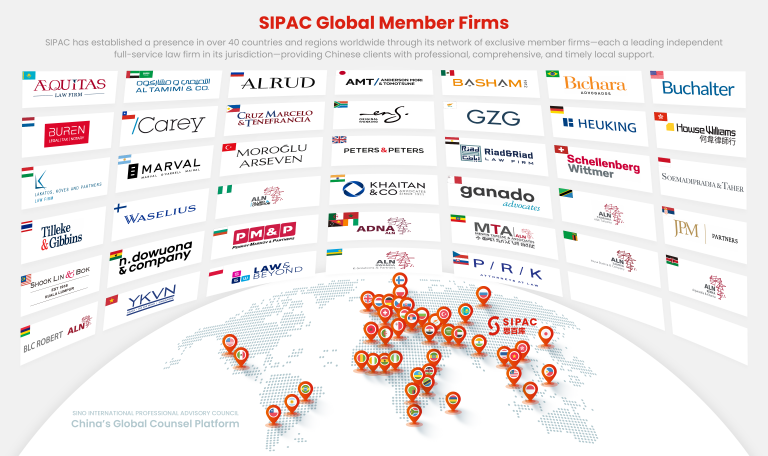
From Pilot to Program: Lessons from the First SIPAC Global Externship Cohort, and a Second Cohort Launches

In July 2026, SIPAC held a review session on the first, pilot cohort of the SIPAC Global Externship Program. Host member firms and Chinese externs from the pilot shared what they gained, what they observed, how the collaboration worked and what should be improved — from the perspective of both the overseas firms and the Chinese lawyers.
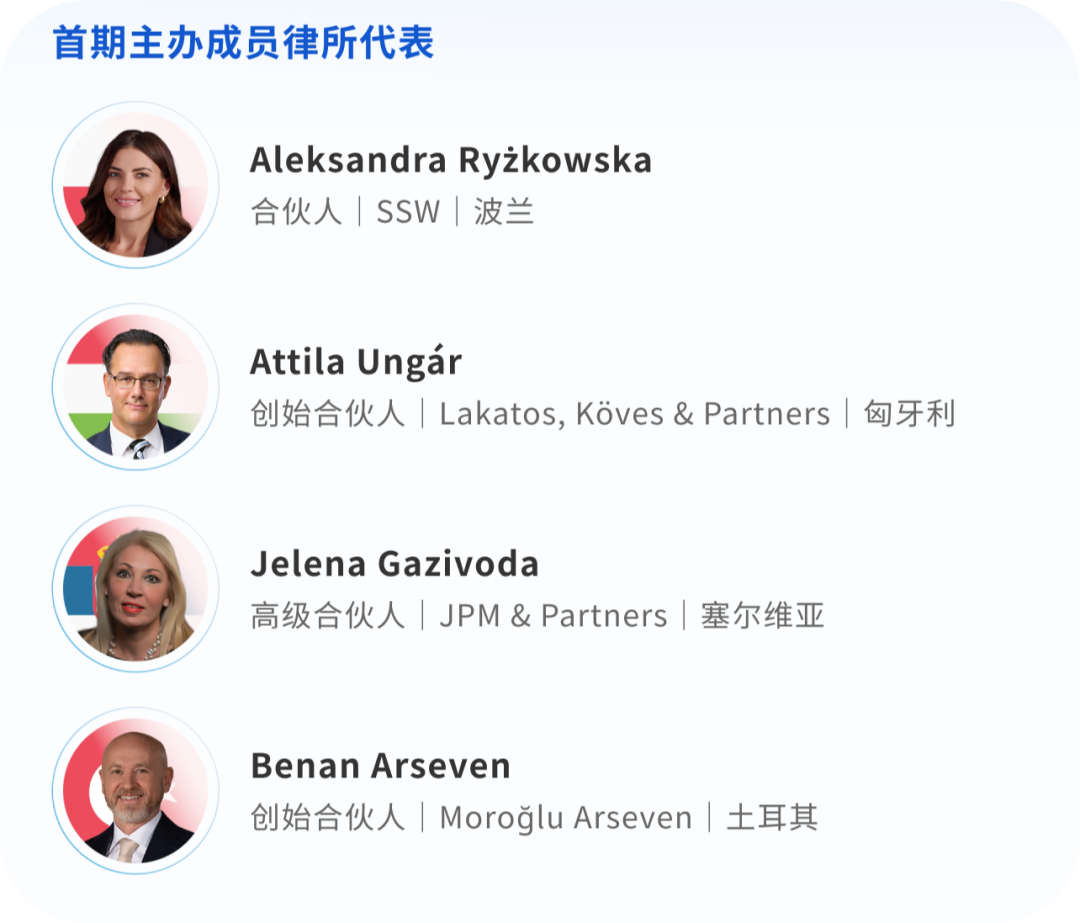
The session was moderated by SIPAC Chairman Robert Lewis, with representatives of the pilot’s four overseas host member firms:
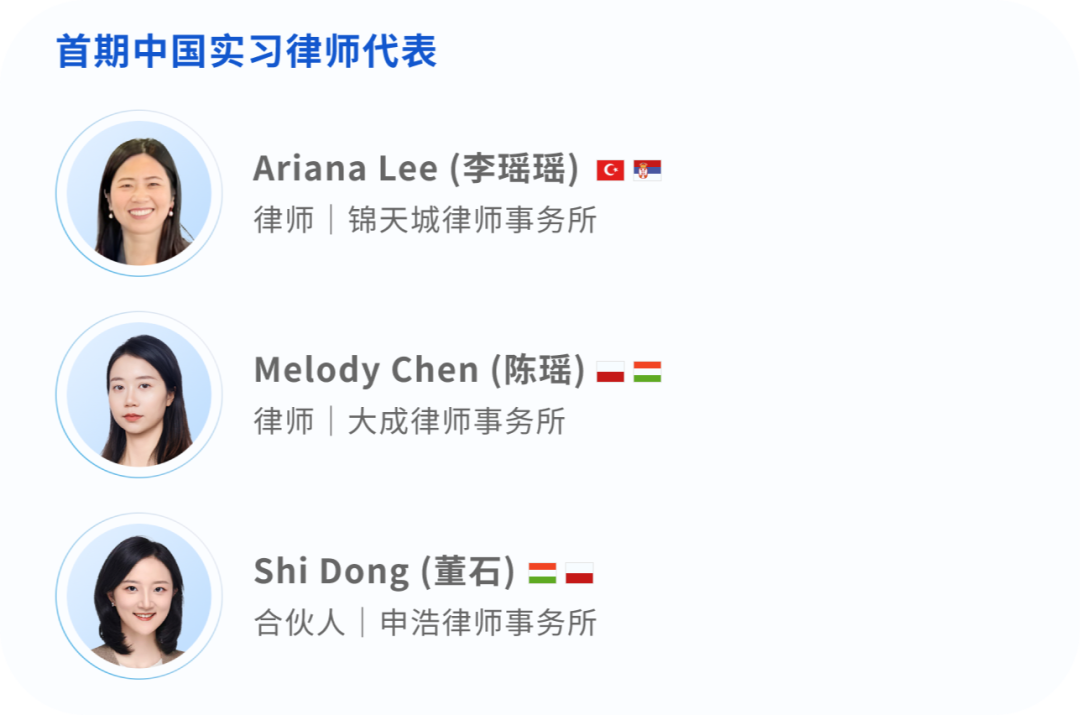
From the Chinese externs, Melody Chen, Senior Associate at Dacheng, spoke in person about her placements in Poland and Hungary. Ariana Lee, Senior Associate at AllBright Law Offices, could not attend because of a flight change but submitted written feedback, which Robert presented on her behalf. Dong Shi, Partner at Shen Hao Law Firm, was unable to attend due to illness.
As an important SIPAC pilot to connect the Chinese and international legal markets more deeply, the first cohort gave Chinese lawyers the chance to work inside overseas member firms on real cross-border matters — and gave the host firms a rare window into Chinese clients, Chinese lawyers and the legal needs of Chinese companies going global.
01Background: from connecting resources to building capability together
Chinese outbound investment has kept accelerating in recent years, into ever more jurisdictions, with increasingly complex deal types, regulatory requirements and dispute risks. At the same time, the role of Chinese lawyers on cross-border projects is changing — from traditional Chinese counsel to coordinators across jurisdictions, translators of client needs, quality controllers of cross-border legal work, and drivers of commercial execution.
Against this background, SIPAC launched the externship program to place outstanding Chinese lawyers in the real working environment of overseas member firms, working side by side with local teams and gaining exposure to local Chinese companies, regulation, market trends and service models — strengthening their practical ability to collaborate and serve clients internationally.
Opening the session, Robert said it was a special occasion. As a pilot, the first cohort was both an international professional placement for Chinese lawyers and an important experiment in deeper collaboration between SIPAC member firms. The review would capture the lessons — good and bad — to lay a more mature foundation for the second and later cohorts.
02The Chinese lawyer’s view: an externship is about much more than “learning foreign law”
Melody Chen began with her key takeaways from her placements in Hungary and Poland. The greatest value of an externship, she said, is not learning the letter of local law, but understanding — through real market situations — the regulatory, compliance, communication and decision-making challenges Chinese companies face abroad.
In Hungary, for example, the “Eastern Opening” policy of recent years has attracted many Chinese new energy and manufacturing companies, and some see Hungary as their first step into the EU market. But business practices and ways of driving projects developed in China do not necessarily carry over to Europe.
Citing the environmental, ESG and regulatory challenges faced by Chinese new energy companies building plants in Hungary, she noted that Europe’s regulatory environment is highly complex — especially environmental approvals, labor protection, public procurement, foreign investment screening, supply chain compliance and ESG — and companies must take it seriously from the earliest stage of a project.
For Chinese lawyers, this means that advising clients is not just about listing European laws and regulations, but about using real local cases to help clients form realistic expectations of regulatory complexity abroad. Learning to manage client expectations, she said, was one of the most important things the externship taught her.
This reflects the core of capacity building for Chinese cross-border lawyers: excellent cross-border legal service is not only about knowing what the law says, but about judging which legal and regulatory factors will actually affect a project’s progress, deal structure and the client’s decisions.
03The host firm’s view: understanding how Chinese clients work is the first step to serving them
From the host firms’ side, Jelena Gazivoda, Senior Partner at JPM & Partners (Serbia), said one of the program’s greatest benefits was helping her firm understand, concretely, how to work more effectively with Chinese lawyers, Chinese clients and local Chinese companies.
In the early stages of a relationship with a Chinese client, she noted, overseas firms often invest a lot of time in communication and preparation that does not immediately turn into a formal engagement. For many European lawyers, a client expecting a fair amount of initial case assessment, document review or analysis of options before paying can be at odds with local market habits.
Through working with the Chinese externs, JPM came to better understand how Chinese clients think at the early stage: they want an initial assessment to decide whether a matter is worth pursuing, whether the budget is reasonable and whether there is a basis for internal approval. Overseas firms serving Chinese clients therefore need to draw clearer lines between an “initial view”, a “formal legal opinion”, a “fee proposal” and “follow-on in-depth work” — and to hold realistic commercial expectations about up-front investment.
Jelena also noted that during her time in Belgrade, Ariana Lee helped JPM strengthen its ties with the Chinese chamber of commerce and the Chinese business community in Serbia — giving the firm more market touchpoints and helping the local team better understand what Chinese companies there really need.
04Chinese lawyers as lead counsel: more than forwarding legal opinions
Robert presented Ariana Lee’s written feedback on how Chinese lawyers can play the lead counsel role more effectively.
On cross-border matters, Ariana wrote, Chinese lawyers should not simply hand a matter over to an overseas firm, nor forward the foreign lawyer’s English legal opinion to the Chinese client unchanged. Instead, they should take a more active part in managing the project — owning communication and coordination, quality control, translating client needs and localizing the deliverables.
Overseas lawyers, she noted, are used to issuing formal English opinions after a call. These documents are centered on the local legal framework and rigorously reasoned, but can be hard for Chinese clients to digest. Chinese clients prefer to clarify questions directly through interactive calls and real-time communication. Until the relationship matures, regular calls bringing together the Chinese lawyer, the overseas lawyer and the client help build trust, reduce misunderstandings and improve efficiency.
Melody Chen added two concrete suggestions from her own experience.
First, Chinese lawyers should help the client and the overseas firm agree on scope and fee structure early. Chinese clients are sometimes used to broad, “package” arrangements, whereas European firms place more emphasis on specific scope, time commitment and fee structure. The Chinese lead counsel needs to explain and mediate between the two so that scope and budget match.
Second, Chinese lawyers should work with overseas firms to shape the deliverables, rather than mechanically forwarding English memos. For Chinese clients, the most valuable output may be a Chinese executive summary, an issues list, a risk matrix, a decision path or recommendations on next steps. Chinese lawyers should help overseas firms understand early what format, depth and decision-making purpose the client expects.
Summing up, Robert said one of the core values of Chinese lead counsel is understanding how Chinese clients think and make decisions internally, and turning foreign lawyers’ professional work into something Chinese clients can absorb and use.
05What Chinese clients really value: efficiency, quality, trust — and their internal decision path
Ariana’s feedback also offered further observations on Chinese clients. Of course they care about price, she wrote, but price is neither their only nor their top priority. Especially at first contact, price seems important largely because trust has not yet been established and the client cannot yet judge the overseas firm’s quality and commitment.
What Chinese clients really value is efficient, high-quality service from a team that understands their business goals and internal reporting needs. Overseas firms should go beyond general introductions and showcasing expertise, and make an effort to understand their contact’s role, seniority, decision-making authority and reporting line — and whether the matter needs approval from headquarters in China.
This is especially important for overseas firms. Business staff or local managers at Chinese companies’ overseas operations are often enthusiastic about legal services and may show strong interest in local lawyers, but the final decision usually rests with legal, compliance or management at headquarters in China. Overseas firms should not read a local contact’s positive response as a formal engagement, but work with the Chinese lead counsel to help the client complete internal reporting and decision-making at headquarters.
Ariana also stressed the importance of genuine, lasting relationships with local Chinese companies. Many employees of Chinese companies not only work but live locally. Overseas firms that build trust with the local Chinese community in a natural, long-term way will be better placed for future professional work.
06From business development to co-created content: what the pilot achieved in each jurisdiction
Each host firm designed a different program for its Chinese extern based on its own market, with distinctive results.
1. LKT (Hungary): building market connections on the back of Chinese investment — and making “Chinese clients” real
Attila Ungár, Founding Partner of Lakatos, Köves and Partners (LKT), explained that Hungary has become a key destination for Chinese investment in Europe, with Chinese companies especially active in new energy, automotive, batteries and infrastructure. To prepare for the extern, LKT first mapped the Chinese companies in the Hungarian market — existing clients, potential clients, new investors entering the market and relevant event platforms.
During the placement, the Chinese lawyer took part in events with local Chinese companies, including major trade fairs and business events. The LKT team reviewed attendee lists in advance to identify potential contacts, and the extern helped with outreach before the events, conversations on site and follow-up afterwards.
Having a Chinese lawyer in the local team sends a strongly positive signal to Chinese clients, Attila said. It is not easy for a Hungarian firm to find a lawyer who is a native Chinese speaker, knows the Chinese legal market and has worked in an institutional law firm. Bringing in a Chinese lawyer through the SIPAC program effectively brings knowledge of the Chinese legal market and client understanding into the local market.
He also highlighted the importance of WeChat in communicating with Chinese clients. European lawyers may install WeChat, but are not used to it as a day-to-day business tool. The extern could build and maintain initial contact with Chinese clients on WeChat, then gradually move communication to email, which is more common in European business. That “communication bridge” is exactly what overseas member firms need as they develop China business.
After the session, Richard Lock, Senior Partner at LKT, added an important observation for the SIPAC team: for the wider group of lawyers at a host firm, simply having a Chinese lawyer in the office for several weeks is valuable in itself. It turns the “Chinese client” from an abstract, distant and sometimes stereotyped commercial counterpart into something more real and human — embodied by a specific, professional, friendly and trustworthy Chinese lawyer.
For many European lawyers, Richard noted, working with Chinese clients has not always been smooth: different legal systems, communication habits, working rhythms and commercial expectations can all create misunderstanding or distance. Having a Chinese lawyer actually in the office — working, talking and taking part in business development and internal discussions with the local team — can gradually change how the whole team sees Chinese clients, Chinese lawyers and the Chinese legal market.
This points to another value of the program: it helps not only Chinese lawyers understand the European market, but also European lawyers understand the Chinese legal profession more naturally. Dong Shi, Melody Chen and Ariana Lee represented not only their own firms but, in their daily work, the Chinese legal profession, Chinese business culture and the professionalism of Chinese lawyers in international cooperation.
Richard also noted that being able to show clients and the market that “we have a Chinese lawyer working in our office as part of the team” is itself part of how LKT builds its China practice. That value can be hard to quantify, but it matters a great deal in the long term for a local firm to be seen as genuinely engaged in China-related work — the firm Chinese investors naturally think of.
Seen this way, the SIPAC Global Externship Program is not just a talent exchange, but a mechanism for brand building, internal culture building and cross-cultural trust. It helps overseas member firms move from “being interested in China” to demonstrating long-term commitment, team readiness and real connections in China business.
2. SSW (Poland): from internal awareness to a “Doing Business in Poland” guide for Chinese investors
Aleksandra Ryżkowska, Partner at SSW (Poland), described a more structured program with goals on several levels.
The first was promoting the firm’s China Desk internally. SSW is a large Polish firm with about 140 lawyers and 220 staff; although it already serves many Chinese clients, not everyone fully understood how the China Desk works or why it matters. The extern met in depth with different offices, practice teams and many partners, helping the whole firm better understand the opportunities in China business and how to serve it.
The second was mapping Chinese companies in Poland. The extern helped track Chinese investment activity, sector distribution, business news, potential contacts and routes to market, giving SSW clearer baseline data for future China business development.
The third — and one of the most important results — was helping write a Doing Business in Poland guide for Chinese investors. SSW already had a general investment guide, Aleksandra explained, but Chinese investors face more specific regulatory requirements in Europe, including foreign investment screening, public procurement restrictions, local content requirements at EU and Polish level, and supply chain rules. SSW therefore wanted materials written specifically for Chinese investors.
In the process, the extern worked across about 20 areas of Polish law — including employment, public procurement, foreign investment screening and tax — and with partners from many practice groups to set out the key legal issues for Chinese companies doing business in Poland. The guide runs to about 60 pages and is now being designed by the marketing team as a key business development resource for Chinese investors.
Aleksandra was candid that, given the short placement, some plans were not completed, such as an online event for member companies with the local Chinese chamber of commerce and further meetings with potential Chinese clients. The pilot showed the clear value of Chinese lawyers in internal capability building, market research, client communication and content co-creation, she said — and a longer placement could deliver even more.
3. Moroğlu Arseven (Turkey): short placements can still create dense connections
Benan Arseven, Founding Partner of Moroğlu Arseven (Turkey), shared the firm’s experience hosting a Chinese extern in Istanbul. The firm had hosted European lawyers before, but this was its first in-depth collaboration with a Chinese lawyer — a valuable opportunity to understand Chinese clients’ expectations, Chinese business habits and how Chinese lawyers work.
In about a month, the firm and the extern visited Chinese clients in Istanbul and built ties with the Turkish-Chinese business association. A month is not long, Benan noted, and it is hard to integrate an extern deeply into complex ongoing matters, but the short placement was already very effective for business development, understanding clients and building relationships.
He cautioned that extending placements to six months or a year could raise work permit, visa and other administrative compliance issues, which would be an extra burden for many firms in Europe and elsewhere. From a host firm’s perspective, one- to two-month placements are very workable at the pilot stage.
4. JPM (Serbia): planning and shared expectations are essential
Jelena Gazivoda added in later discussion that, for better results, future cohorts should invest more time in two-way communication and planning before the placement starts. Host firms and externs should agree expectations in advance: what the firm wants to achieve, what experience the extern hopes to gain, the types of work available, business development tasks, internal training and deliverables.
The pilot had already produced many valuable lessons, she said, but it also showed how critical time is. The shorter the placement, the more detailed the preparation needs to be to make it efficient and productive.
07An extern’s unexpected gains: personal connections create new business possibilities
Speaking about her personal experience, Melody Chen said that beyond learning about the Polish and Hungarian legal markets, what struck her most were the human interactions.
At SSW she entered a completely new working environment, but colleagues knocked on her door to chat, invited her to lunch and discussed cultural and legal differences between China and Poland. These natural exchanges helped her settle into the team quickly and sparked new ideas for cooperation. After talking with an SSW partner, for example, they organized an online session on European cybersecurity law for her colleagues in China, presented by SSW lawyers and interpreted by Melody. It went well, and her Chinese colleagues suggested inviting clients to similar sessions in future.
In Hungary, Melody took part in events for Chinese companies such as the China Brand Fair, introducing LKT’s services to Chinese companies with the firm’s materials. When Chinese companies see a native Chinese-speaking lawyer in a local European firm’s team, she said, they naturally sense how seriously the firm takes China business, and initial trust comes more easily.
She summed up the pilot with a vivid image: for Chinese law firms, lawyers and companies, how best to go global is still a path being explored. What SIPAC is doing is like planting a small seed — one that may one day truly flower and bear fruit.
08Placement length: short pilots, long-term cooperation and flexible arrangements
The session also discussed the ideal length and format for future placements.
Benan Arseven saw one to two months as a good starting point. Short placements carry little administrative burden, make firms more willing to host, and let both sides get to know each other first. For a firm that has never had a Chinese lawyer in its office, a month is enough to understand Chinese client needs, organize client visits, build business association ties and gain initial experience of working together.
Aleksandra Ryżkowska said that, in SSW’s experience, two months still felt too short: much of the work was just getting going when the placement was ending. For firms with fast-growing China business and a strong need to build a China Desk, a one-year placement or even long-term cooperation would be attractive. Where it fits, she added, an overseas firm might want to keep working with the Chinese lawyer after they return to China, perhaps through a cross-border advisory or representative arrangement.
Attila Ungár proposed a practical middle path: treat the short placement as a “matching period”. If the host firm and the Chinese lawyer find they are a good fit, they can explore longer arrangements — extended placements, advisory cooperation or a more formal resident arrangement. This reduces uncertainty at the start and creates deeper opportunities for the right pairings.
Robert added that as SIPAC builds closer strategic partnerships with leading Chinese firms, Chinese firms may in future support outstanding lawyers more formally for long-term exchanges at overseas member firms. The program may also explore a two-way model, with lawyers from overseas member firms spending time at Chinese firms, to deepen mutual understanding further.
09Improvements: clearer plans, named mentors and an ongoing alumni network
Both the Chinese externs and the host firms offered constructive suggestions.
Melody Chen suggested that, where possible, externs stay longer at one firm rather than rotating between several in a short time, to build deeper relationships and better understand local legal and business culture. At full-service firms, she suggested short rotations across departments matched to the extern’s practice area, to give a more systematic view of how the firm is organized and serves clients.
In her written feedback, Ariana Lee recommended stronger joint work plans, mentoring and clear responsibilities. Host firms and externs could agree goals, schedules and expected outcomes before the placement; the host firm could appoint a partner or senior lawyer as mentor to check in regularly, give feedback and help solve problems; and both sides should keep communicating effectively so that the extern truly becomes part of the team and works on meaningful matters.
Speaking for host firms, Jelena Gazivoda stressed communicating expectations earlier and more concretely, combining the firm’s goals with the extern’s development goals into a shared plan.
Benan Arseven suggested that SIPAC keep organizing review sessions like this one, so host firms and externs from different cohorts can share experience. He also proposed an alumni network to keep externs in touch with the overseas member firms, building a long-term international legal community.
Robert said SIPAC is keen to keep supporting the pilot’s participants as key partners and program ambassadors in the Chinese legal market, and hopes more and more Chinese lawyers will build an international professional profile through the program.
10Key lessons from the pilot: not just an internship, but a new mechanism for cross-border legal services
Taken together, the session pointed to at least six lessons from the first cohort:
First, outbound legal work needs more “on-the-ground” understanding. Only by entering the local market and meeting local lawyers and local Chinese companies can one understand the regulatory practice, client decision-making and business environment beyond the letter of the law.
Second, the lead counsel role of Chinese lawyers must be upgraded. Tomorrow’s Chinese cross-border lawyers must not only know Chinese law and their clients’ needs, but also manage foreign counsel, transform work product, control project quality and help clients bridge differences in language, legal systems and business culture.
Third, overseas firms serving Chinese clients need to understand the client’s internal decision chain. Local contacts at Chinese companies are often not the final decision-makers. Overseas firms need to understand the client’s real needs, reporting lines and approval processes through Chinese lawyers or contacts at headquarters.
Fourth, Chinese lawyers can be an important bridge between overseas member firms and Chinese clients — through WeChat, chamber events, client visits, Chinese-language materials and building the firm’s China Desk.
Fifth, short placements can work as a matching mechanism, with long-term cooperation as a future direction. One to two months is a good starting point; where both sides are a strong fit, longer, more flexible and more structured arrangements can follow.
Sixth, SIPAC can be a platform for building capability together across Chinese and international firms. Through its member network, program organization, reviews, alumni network and two-way exchanges, SIPAC is driving a deeper model of China–international legal collaboration.
11Second cohort: from pilot to more jurisdictions worldwide
With the pilot complete, SIPAC is launching the second cohort of the Global Externship Program.
The second cohort is expected to run from September to November 2026, with host member firms in:
Brazil | Bulgaria | Hungary | Kenya | Romania
Closing thoughts
The SIPAC Global Externship Program is still evolving. The pilot has shown that it offers real career value for Chinese lawyers, and practical help for overseas member firms in serving Chinese clients, understanding the Chinese legal market and reaching local Chinese companies.
From pilot to established program, and from one-way exchange to mutual capability building, SIPAC will keep building closer, more practical and more sustainable relationships between its global member firms and the Chinese legal profession.
Member firms interested in hosting a Chinese extern in a future cohort are welcome to contact the SIPAC team.